Mostrando las entradas con la etiqueta (8vo) Geografía. Mostrar todas las entradas

sábado, 12 de diciembre de 2015

Political, Economic, and Urban Geography

Population

  1. demography – the study of changes in population
    • Demohraphic changes can be due to human reasons (like crime, wars, births, deaths, suicides, etc.) or due to natural reasons, which cause most deaths (like tsunamis, storms, droughts, earthquakes, volcanic eruptions, etc.)
  2. birth rate – amount of people that are born per every 1,000 persons, increase in population (ratio)
    • Usually countries with higher birth rates (X = 150 : 1,000) tend to be poorer since people are less conscious when having children, on richer countries (Y = 50 : 1,000) people tend to me more educated and conscious when having children.
  3. death rate (mortality rate) – amount of people that die per every 1,000 persons, decrease in population (ratio)
    • Usually countries with a higher death rate (X = 150 : 1,000) are poorer because of the lack of medical attention, richer countries (Y = 50 : 1,000) tend to have a low death rate due to advanced medicine.
  4. infant mortality rate – amount of children that die before 1 year of age per every 1,000 live births
    • Countires with high infant mortality rates are usually poorer.
    • When working with life expectancy they’re passed as zero.
  5. fertility rate – the amount of women that find themselves in the age of reproduction (13 – 25), in poor countries there are more, the higher this number the higher the birth rate
  6. rate of natural increase – the speed at which a population grows (births – deaths = RNI)
  7. life expectancy – average amount of years a person is expected to live (per country)
    • Low life expectancies indicate poor quality of life which may be due to crime, war, hunger, no medicine, etc.
    • High life expectancies indicate a better quality of life due to medical advances, etc.
    • To find life expectancy we add all the ages of death we’re given and then divide them by the amount of numbers we were given.
  8. population density – the average amount of people per square mile (PD = population/area)
    • Puerto Rico’s population density is around 1,057 people per sq. mile.
  9. carrying capacity – amount of people that can live in a place without affecting the environment
  10. push-pull factors – factors that move population; push = leaving/moving/exiting, pull = attraction/coming/entering
  11. population pyramids – diagram that shows population distribution in terms of age and gender
  • The world’s population is about 7.3 billion people.
  • China (1.4B) and India (1.2B) are the countries with the largest populations.
  • Asia is the continent with the greatest population.
  • The total population of Puerto Rico is about 3.7 million, but there are around 1.5 million puertoricans outside of Puerto Rico.
  • There are four stages to population growth:
    1. Stage 1: High birth rates and high death rates
      • Zero population growth because births = deaths.
      • This stage is extinct since the Introduction of Agriculture (10,000 years ago).
    2. Stage 2: High birth rates and decreasing death rates
      • Rapid population growth, the population boom refers to a dramatic increase in population growth.
      • The poor countries of Asia, Africa, and Latin America are in this stage due to lack of knowledge and education of how many children you can maintain, and lack of access to protection.
      • The extended family is most found here, where the family is made up of mother, father, children (could be more than 2), and other family members (grandparents, aunts, uncles, etc.).
    3. Stage 3: Decreasing birth rates and low death rates
      • Slow population growth occurs in this stage.
      • Developed countries of Europe, America, and Asia are in this stage. Puerto Rico is in this stage.
      • The nuclear family is the most popular here, it’s made up of mother, father, and 2 children.
    4. Stage 4: Low birth rates and low death rates
      • Zero population growth (birth rate = death rate, no significant growth)
      • Countries in Northern Europe are often found in this stage because young people don’t want to have children.
      • It’s dangerous because the country’s future is old and productivity lowers because there are no young workers.

Political Geography

  1. state – A country that has total control over its own decisions, in and out of the territory (complete political power).
  2. nation – A country united by a similar cultural identity.
  3. nation-state – A country that has complete political power and is united by a similar cultural identity

Types of Government

  1. monarchy – country ruled by a King or Queen
    • absolute monarchy – the King or Queen has total power, they came to decline after the French Revolution (Fernando & Isabel of Spain, Henry VIII of England)
    • constitutional monarchy – monarchy is preserved as a tradition, but the King or Queen has no real power, the government elected by the people has the power, so it’s a democracy (Spain, Great Britain)
      • Parliament – law-making body in constitutional monarchies, it consists of:
        • House of Commons – voice and vote
        • House of Lords – only voice
  2. democracy – a government elected by the people and for the people, made up of 3 branches that are constantly checking on each other to eliminate total power (USA, Canada, Colombia, Argentina)
    • executive branch – consists of the president and his Cabinet (which is selected by the president)
    • judicial branch – consists of the courts and judges, they enforce the laws (the Supreme Court is the most importaint in USA)
    • legislative branch – law-making body, also known as Congress: the Senate and the House of Representatives (the Senate has 2 members per state for a total of 100; the House depends on the population of each state)
  3. communism – a government that has complete political and economic control, it was born in Russia in 1917 (China, Cuba – Fidel Castro, Laos, North Korea, Vietnam)
    • Mikhail Gorbachev – the one that brought about change in Russia
    • Glasnost – call for openness and transparency in the government
    • Perestroika – refers to the restructuring of the government
  4. totalitarian – a government taken and maintained by force and violence, the people have little or no rights, it usually benefits the few that hold power (Kim Jong-un – North Korea, Vladimir Putin – Russia)

The Three Characteristics of Nations

  1. Size – determines amount of power since a larger area may include more natural resources
  2. Shape – determines difficulty to govern (archipielagos may be harder to govern because the territory is separated)
  3. Location – determines success of its commerce and economy (exports, imports, tourism, etc.)

Boundaries

  • Natural boundaries are those made by nature, like:
    • The Pyrenees Mountains (separate France from Spain)
    • The Alps (separate France from Italy)
    • The Himalayas – where Mount Everest is (separate China from India)
    • The Ural Mountains (separate Asia from Europe)
    • The Caspian Sea (separate Asia from Europe)
    • The Rio Grande (separated Mexico from the United States)
    • The Mediterranean Sea (separates Europe from Africa)
    • The Sahara Desert (separates North Africa from South Africa)
  • Artificial boundaries are the ones that are man-made, made by humans, like:
    • All the political boundaries that separate all the countries on Earth.
    • All the lines of latitude and longitude that are used to measure exact location.
    • The Berlin Wall – was built in the early 60’s and was a major symbol of the Cold War, it came down on 1989 (separated East and West Berlin)
    • The Great Wall of China (separated China from Mongolia)

Economic Geography

  1. Economy – The constant interchanging of goods and services.
  2. Traditional Economy – The very first type of economy based on the barter system, or the exchange of one product for another.
  3. Command Economy – An economy where the means of production and distribution are totally controlled by the government. It is the economy of the Communist System.
  4. Market Economy – An economy where the means of production and distribution are found in private individuals through the legal authorization of the government. It is the economy of the Capitalist System.
  5. Mixed Economy – An economy that has both Command and Market economies. It is the most common, and it safeguards the interest of the people.
  6. Infrastructure – all the major projects developed and funded by the government (roads, expressways, public housing, parks, etc.)
  7. Per capita income – average amount of money that each person would receive if the GDP or GNP was divided equally among the population, it tells us how rich/poor is the country (PC = GDP/Pop)
  8. Gross National Product (GNP) – the sum of all goods and produced in and out of the country in one year
  9. Gross Domestic Product (GDP) – the sum of all goods and services produced in the country in one year

The Four Levels of Economic Activity

  1. Primary Activity:
    • Makes direct use of nature and obtain raw materials.
      • Lumberjacks, miners, farmers, fishermen…
  2. Secondary Activity:
    • Does manufacturing and processing of raw materials.
      • All types of factories and their workers.
  3. Tertiary Activity:
    • Involves work in any type of service.
    • Most people in advanced countries work on this level.
      • Janitors, doctors…
  4. Quaternary Activity:
    • Super specialized people in their works.
      • Areas of science and technology

Natural Resources

  1. natural resources – all the resources produced by nature (raw materials that are then processed)
  2. renewable resources – all the resources that can be regenerated or regrown (vegetation, fruits, trees, animals)
  3. non-renewable resources – all the resources that will never be regenerated once they have finished (oil, petroleum, coal, gas, diamonds, emeralds, gold, silver)
  4. inexhaustible resources – all the resources that will never be used up (wind, water, sun – also the 3 important energy resources)

Urban Geography

  1. Urbanization – growth and expansion of cities (population growth)
  2. Suburbs – area that surround the city
  3. Exurbs – area that surround the suburbs
  4. Metropolitan Area – made up of urban area, suburbs, and exurbs
  5. Central Buisness District (CBD) – center of major economic activity (Puerto Rico’s CBD is “La Milla de Oro”)

The Three Basic Land Use Patterns Found in Cities

  1. Residential (where people live, housing)
  2. Industrial (where people work, manufacture, factories)
  3. Commercial (where people buy/sell, shops)

Major Services and Functions Found in Cities (Infrastructure)

  1. Transportation
  2. Hospitals
  3. Schools
  4. Parks
  5. Security
  6. Commerce

lunes, 16 de noviembre de 2015

Culture

The Elements of Culture

  1. culture – way of life (location + history)
  2. culture trait – characteristics of a culture
    • Every culture has the same traits: music & dance, food, traditions, religion (beliefs), behavior, moral (the difference between right and wrong) and values (the feelings, ideas and beliefs a society considers important), clothing, language (communication), race, government, economy, architecture, education (knowledge), society, demography, arts, etc.
    • Religion and language are the pillar culture traits, they’re the hardest to change since they’re very deeply embedded in the culture, most culture traits derive from these two.
  3. culture region – geographical area that shares the same culture, or have very similar ones, due to similar climate, topography and geographical location
  4. culture hearth – a place where culture traits originate and spread (cultural diffusion)
    • Mesopotamia was the very first important cultural hearth.
    • Puerto Rico is the cultural hearth of reggaeton music.
  5. cultural diffusion – the dynamic and necessary process of the spreading out of culture traits from a central place (cultural hearth)
    • Cultural diffusion enriches culture.
    • It can be examplified in buisnesses, people, etc.
  6. ethnic group – people that are united by a similar cultural heritage
    • Ethnic groups can create conflicts because people sometimes reject them, they’re often portrayed negatively through stereotyping, discrimination and prejudice.
  7. stereotyping – judging a whole race (generalization) by the negative behavior of a few, it is wrong. When you stereotype you discriminate, they go together.
  8. discrimination – to reject people due to their race, culture, beliefs, social status, etc.; it’s opposing diversity.
  9. prejudice – an irrational (not logical) rejection of differences
  10. nation – where culture conflicts happen
  11. culture conflicts – problems or differences due to ignorance caused because of religion, politics, economy (major in Puerto Rico), race and language
  12. society – a group of people that conflict in a particular place
  13. dialect – a version of a language
  14. innovation – new way of doing something
    • The 3 major innovations in History changes life dramatically and derived a lot of other innovations, they are:
      • Introduction of Agriculture (10,000 y/ago) – Before this we were hunter-gatheres, this allowed an increase in population and settling due to more reliabe sources of food. Domestication (animal taming) began with this innovation.
      • Birth of Civilization (6,000 y/ago) – People began to organize governments and organized life. A writing system was created and it happened slowly (like all other innovations). The major civilizations are Mesopotamia (p/day Iraq, Middle East), Egypt, India and China.
      • Industrial Revolution (1800’s) – Began in Great Britain. Machines began being used to make large quantities of things, it’s the innovation that has derived the most innovations in the shortest period of time.
  15. acculturation – The process by which you adopt and adapt a culture trait and make it your own.
    • Spanglish and Thanksgiving in Puerto Rico are examples of acculturation.
  16. transculturation – Occurs when a culture disappears through intensive contact with another and a new one is born.
    • The taíno culture disappeared due to transculturation.
  17. nationalism – Loyalty to one’s own country, feeling of pride for one’s country.
    • It is good and necessary but can be very negative in extremes as it can turn into ethnocentrism.
  18. fundamentalism – Very strict and conservative religious beliefs, change is not accepted (orthodox).
  19. democracy – System of government that started in Athens, Greece and was progressed by Romans in which members are elected “by the people, and for the people”, giving people rights.
  20. totalitarian – A political system taken and maintained by the use of force, not giving people rights (dictatorship).
  21. ethnocentrism – The belief that your race and culture is superior to others.
  22. politics – organization of government
  23. democratic pluralism – To have respect for other cultutes, this is knowledge and decreases levels of ignorance.

Major Religions on Earth

  • Monotheistic religions only believe in one god. Judaism, Christianity, and Islam are monotheistic.
    1. Judaism
      • Judaism was the first religion to teach the belief in one god (monotheism), Christianity and Islam developed from Judaism.
      • Jews think that god will send a Messiah to unite them, Christians think Jesus was the Messiah.
      • Judaism is a very fundamentalist and orthodox religion.
      • Judaism teaches death is not the end.
      • The Torah consists of the first five books of the Hebrew Bible (first 5 books of Old Testament), it’s the most important Jewish scripture, it contains their basic laws.
      • The Talmud is the guide to civil and religious laws of Judaism.
      • Rabbis conduct services, interpret Jewish laws and deliver sermons in synagogues.
      • The Jewish nation of Israel is where most Jews are.
      • Millions of Jews dies in the Holocaust.
      • Jews are obligated to worship.
    2. Christianity
      • Was founded by Jesus, a Jewish boy who disagreed with some Jewish principles.
      • God, the Father, entered into human history as the Son, Jesus of Nazereth, and arose as the Holy Spirit.
      • Jesus was born of the Virgin Mary, crucified, resurrected from the dead, and ascended to the father.
      • Christians are promised life everlasting.
      • Jesus was the leader of Christianity and he followers his 12 disciples.
    3. Islam
      • Muslims believe the Koran are the words of Allah spoken to Muhammad by the Angel Gabriel.
      • Muslims must pray 5 times in their mosques facing the holy city of Mecca and kneeling with faces to the ground.
      • Muslims are required to make a pilgrimage to Mecca at least once in their life.
      • Muslims learn that life on Earth is a period of testing for the life to come, and that angels record good and bad deeds.
      • Islam has 5 basic pillars:
        • There is no god but Allah.
        • Pray 5 times facing Mecca.
        • Share with the poor.
        • Fast during Ramadan.
        • Go to Mecca at least once in life.
  • Polytheistic religions believe in more than one god. 
    1. Buddhism
      • The Major Philosophy of Budhism requires:
        • Love
        • Compassion
        • Sympathetic Joy
        • Impartiality
      • Buddhism states that existence is a continuing cycle of death and rebirth called reincarnation, Hindus believe this too
      • Each person’s position in life is determined by their behavior in the previous life (karma), Hindus also believe this.
      • Buddhism is the world’s oldest universal religion and the second fastest growing religion.
    2. Hinduism
      • Hindus recognize one supreme spirit called Brahman, and thousands of more gods.
      • The goal of Hindus is to one day join with Brahman, until that union takes place believers are in continuous reincarnation (it’s how they believe the soul is purified).
      • Hindu’s deeds (karma) will determine what their next life will be like.
      • Hindus work to gain release from the “Wheel of Life” (cycle of birth, death, re-birth).
      • The Hindu’s soul merges with Brahman in a condition of spiritual perfection (moksha) when they escape the Wheel of Life.
      • Traditional Hindy society was divided into four classes (varnas), known as the caste system.
        • The caste system ranges from miserably low (untouchables) to really high, you are born and die in the same class. You can move up in your own class by marrying.
  • Animism, also known as traditional beliefs, is the belief in the divine forces of nature.
    1. Shinto
      • Shinto involves the worship of kami, or nature spirits. Some kami are local to a place while others are major (Amaterasu).
      • Shinto is a part of Japanese culture and society.
      • Shinto centers around the worship of nature.
      • Living things and landscapes are considered worthy of worship for their beauty, strength or nobility.
  • Philosophies are also what some people believe in, these do not believe in a specific god, they’re just a lifestyle, a way of looking and thinking about things.
    1. Confucianism
      • Confucius is the Westernized version of the name K’ung Fu-tzu.
      • Confucius was born in 551 B.C.E.
      • He quit his government job to devote his life to teaching people how to behave.
      • Confucianism teaches five basic ideas about behavior:
        • Always be considerate to others.
        • Respect your ancestors.
        • Try for harmony and balace in all things.
        • Avoid extremes in behavior and emotion.
        • If you live in peace and harmony, you’ll be in contact with nature and the spiritual forces of the universe.
      • Confucianism teaches five basic virtues:
        • kindness
        • righteousness
        • sobriety
        • wisdom
        • trustworthiness
      • Confucius taught your well-being depends directly on the well-being of others, this is called Jen, Jen stresses the importance of courtesy and loyalty to others.
      • Confucians believe family and family values are very important.
      • Confucian children are taught to be very respectful and to obey their parents.
    2. Taoism
      • Tao means the way, or the path.
      • Lao Tsu founded Taoism.
      • Taoists say if you think the right way you’ll be happier, they encourage optimism.

Population

  1. demography – the study of changes in population
    • Demohraphic changes can be due to human reasons (like crime, wars, births, deaths, suicides, etc.) or due to natural reasons, which cause most deaths (like tsunamis, storms, droughts, earthquakes, volcanic eruptions, etc.)
  2. birth rate – amount of people that are born per every 1,000 persons, increase in population (ratio)
    • Usually countries with higher birth rates (X = 150 : 1,000) tend to be poorer since people are less conscious when having children, on richer countries (Y = 50 : 1,000) people tend to me more educated and conscious when having children.
  3. death rate (mortality rate) – amount of people that die per every 1,000 persons, decrease in population (ratio)
    • Usually countries with a higher death rate (X = 150 : 1,000) are poorer because of the lack of medical attention, richer countries (Y = 50 : 1,000) tend to have a low death rate due to advanced medicine.
  4. infant mortality rate – amount of children that die before 1 year of age per every 1,000 live births
    • Countires with high infant mortality rates are usually poorer.
    • When working with life expectancy they’re passed as zero.
  5. rate of natural increase – the speed at which a population grows (births – deaths = RNI)
  6. life expectancy – average amount of years a person is expected to live (per country)
    • Low life expectancies indicate poor quality of life which may be due to crime, war, hunger, no medicine, etc.
    • High life expectancies indicate a better quality of life due to medical advances, etc.
    • To find life expectancy we add all the ages of death we’re given and then divide them by the amount of numbers we were given.
  7. population density – the average amount of people per square mile (PD = population/area)
    • Puerto Rico’s population density is around 1,057 people per sq. mile.
  8. carrying capacity – amount of people that can live in a place without affecting the environment
  9. push-pull factors – factors that move population; push = leaving/moving/exiting, pull = attraction/coming/entering
  10. population pyramids – diagram that shows population distribution in terms of age and gender
  • The world’s population is about 7.3 billion people.
  • China (1.4B) and India (1.2B) are the countries with the largest populations.
  • Asia is the continent with the greatest population.
  • The total population of Puerto Rico is about 3.7 million, but there are around 1.5 million Puerto Ricans outside of Puerto Rico.
  • There are four stages to population growth:
    1. Stage 1: High birth rates and high death rates
      • Zero population growth because births = deaths.
      • This stage is extinct since the Introduction of Agriculture (10,000 years ago).
    2. Stage 2: High birth rates and decreasing death rates
      • Rapid population growth, the population boom refers to a dramatic increase in population growth.
      • The poor countries of Asia, Africa, and Latin America are in this stage due to lack of knowledge and education of how many children you can maintain, and lack of access to protection.
      • The extended family is most found here, where the family is made up of mother, father, children (could be more than 2), and other family members (grandparents, aunts, uncles, etc.).
    3. Stage 3: Decreasing birth rates and low death rates
      • Slow population growth occurs in this stage.
      • Developed countries of Europe, America, and Asia are in this stage. Puerto Rico is in this stage.
      • The nuclear family is the most popular here, it’s made up of mother, father, and 2 children.
    4. Stage 4: Low birth rates and low death rates
      • Zero population growth (birth rate = death rate, no significant growth)
      • Countries in Northern Europe are often found in this stage because young people don’t want to have children.
      • It’s dangerous because the country’s future is old and productivity lowers because there are no young workers.

jueves, 10 de septiembre de 2015

Geography Module 1 Review (vocab, maps, themes, key places)

Vocabulary/Terms:

  1. Earth – our planet, located on the solar system in the Milky Way galaxy
  2. culture – way of life, it’s based on location and history and divided into:
    • politics (organization of government)
    • religion (beliefs)
    • economy (interchanging of goods and services)
  3. Astronomy – study of the universe
  4. Demography – study of population
  5. Ecology – study of the environment
  6. Topography – study of Earth’s physical features
  7. Oceanography – study of oceans (bodies of water)
  8. Climatology – study of climates (location)
  9. Meteorology – study of weather (variations that occur in the atmosphere)
  10. Geology – study of Earth’s structure and its components (can study fossils and minerals)
  11. Archeology – study of what people make, build, and do
  12. Anthropology – study of humans and evolution
  13. Paleontology – study of dinosaurs
  14. Geography – study of the Earth
  15. Absolute Location – an exact location
  16. Relative Location – a location named using reference points and cardinal directions, a position in relation to other objects
  17. Hemisphere – a half of the Earth, there are 4 hemispheres: northern, southern, eastern and western
  18. Equator – latitude that sits at 0°, dividing Earth into northern and southern hemispheres
  19. Prime Meridian – longitude that sits at 0°, dividing Earth into eastern and western hemispheres
  20. Latitudes or Parallels – imaginary lines that run to the north and south of the Equator from east to west (horizontally) from 0° to 90° (#° N/S)
  21. Longitudes or Meridians – imaginary lines that run to the east and west of the Prime Meridian from north to south (vertically) from 0° to 180° (#° E/W)
  22. Degree – unit of measurement used to identify each latitude & longitude
  23. Continents – continuous land masses; there are 7: Africa, Antarctica, Asia, Australia, Europe, North America and South America
  24. Oceans – large bodies of water; there are 4: Pacific Ocean (largest and deepest), Arctic Ocean, Atlantic Ocean and Indian Ocean (smallest)
  25. Island – a piece of land surrounded by water on all its sides
  26. Peninsula – a piece of land surrounded by water on 3 sides, but attached to land
  27. Globe – scale model of planet Earth in sphere form, more accurate than a map, the ideal representation of Earth
  28. Map – slightly distorted flat representation of the planet
  29. Cartographer – person who creates maps
  30. Cartography – art of map making
  31. Map Projection – ways to transfer a round surface to a flat one
  32. Topographic or Physical Map – map that represents physical features
  33. Landsat – satellite belonging to the US which takes images of Earth
  34. Geographic Information System (GIS) – bank that stores geographical information
  35. Surveying – process of observing and taking note
  36. Grid – system of horizontal and vertical lines used to pinpoint any location
  37. Scale – part of the map that refers to the proportion of the actual distance and the distance on the map, it’s inaccurate because it’s a line and Earth is round
  38. Great Circle Route – shortest distance between any two points on a map
  39. Legend or Key – part of the map that defines the symbols and colors used on the map
  40. Compass Rose – part of the map that displays the four main cardinal points (simple compass rose) and the four subdivisions (complex compass rose)
  41. Directional Indicator – an arrow pointing either North or South used in certain modern maps instead of the compass rose
  42. Physical Geography – describes Earth’s topography and physical features
  43. Political Geography – associated to land borders and people
  44. Thematic Map – map designed to show a particular theme
  45. Qualitative Map – map that gives us information directly and briefly, it shows a pattern or tendency and is identified with the use of different colors and shapes
  46. Flow-Line Map – map that shows movement with the use of arrows
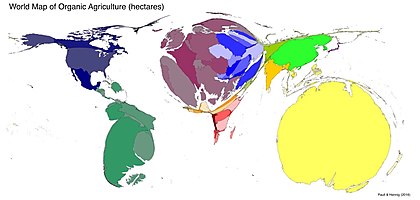
  47. Cartogram – map that shows information based on geographic features, the map base is distorted to show the information

What is Geography?

  • Geography is the study of Earth.
  • The word itself is of Greek origin, and means Earth’s description (geo = Earth, graphy = description).
  • It’s divided into two parts:
    • Physical Geography (topography & location)
    • Human Geography (culture)
  • Physical geography should always be studied before human geography, since should know where a country is and what it’s like physicalle before learning about its people.

Continents & Oceans

Map Of Seven Continents And Oceans - Free Printable Maps (With ...

  • The seven continents are: North America, South America, Africa, Asia, Australia, Antarctica, and Europe.
  • The four oceans are: Pacific Ocean (largest & deepest), Arctic Ocean, Atlantic Ocean, and Indian Ocean (smallest)

Globes vs. Maps

  • Globes
    • Advantages: presents the reality of Earth…
    • Disadvantages: no detail, no portability, only one side can be seen at a time…
  • Maps
    • Advantages: easy to measure location and distance, detailed, portable…
    • Disadvantage: distorted…

Qualitative Maps, Flow-Line Maps & Cartograms

Qualitative Map
  • Qualitative Map 
    • Shows a particular pattern or tendency.
    • Situations are repeated.
    • Identified with the use of colors/shapes.
    • Give us information in a simple and concise form.
Overview of Flow Mapping ~ GIS Lounge
  • Flow-Line Map
    • Shows movement with the use of arrows.
    • The thicker the arrow, the larger the quantity; the thinner the arrow, the smaller the quantity.
Cartogram - Wikipedia
  • Cartogram
    • Shows information based on geographic features.
    • Map base is distorted.
    • Larger = more, smaller = less.

The 5 Themes of Geography

  1. Location (Where is it?)
    • Absolute – Latitudes & longitudes or adress (exact)
    • Relative – Position referring to other places (reference points)
  2. Place (What is it like? – singular)
    • Physical Geography (topography)
    • Human Geography (culture)
  3. Region (What are they like? – plural)
    • Physical Geography (topography)
    • Human Geography (culture)
  4. Movement (constant coming and going)
    • people migrate because of economy, politics and religion
    • goods are imported and exported through commerce
    • ideas are moved through means of communication
  5. Human-Environment Interaction (relationship between humans and environment)
    • Adapt (provide comfort without modifying nature)
    • Change (nature is modified)

Map Projections

  1. Cylindrical Projection (used to make maps of the world)
    • i.e. Mercator, Robinson
  2. Conic Projection (used to make maps of specific places)
  3. Flat-plane Projection (used to make maps of the poles)

The 5 Parts of a Map

  1. Title (tells what the map is about)
  2. Legend/Key (defines the symbols and colors used on the map to help us understand the map)
  3. Compass Rose (indicates direction, is sometimes substituted for directional indicator)
  4. Grid (system of imaginary lines that helps us determine absolute location)
  5. Scale (line on a map that indicates proportional distance on the map)

Key Places on Earth

Key Places

  • The Equator is located on latitude 0°, it divides Earth into northern and southern hemispheres.
  • The Prime Meridian is located on longitude 0°, it divides Earth into eastern and western hemispheres.
  • Seasons don’t affect Polar Zones nor Tropics very much.
  • The Tropics are:
    • Tropic of Cancer – 23.5°N
    • Tropic of Capricorn – 23.5°S
  • The Polar Zones are:
    • Arctic Circle – 66.5°N
    • Antarctic Circle – 66.5°S
  • The Poles are located on:
    • North Pole – 90°N
    • South Pole – 90°S